
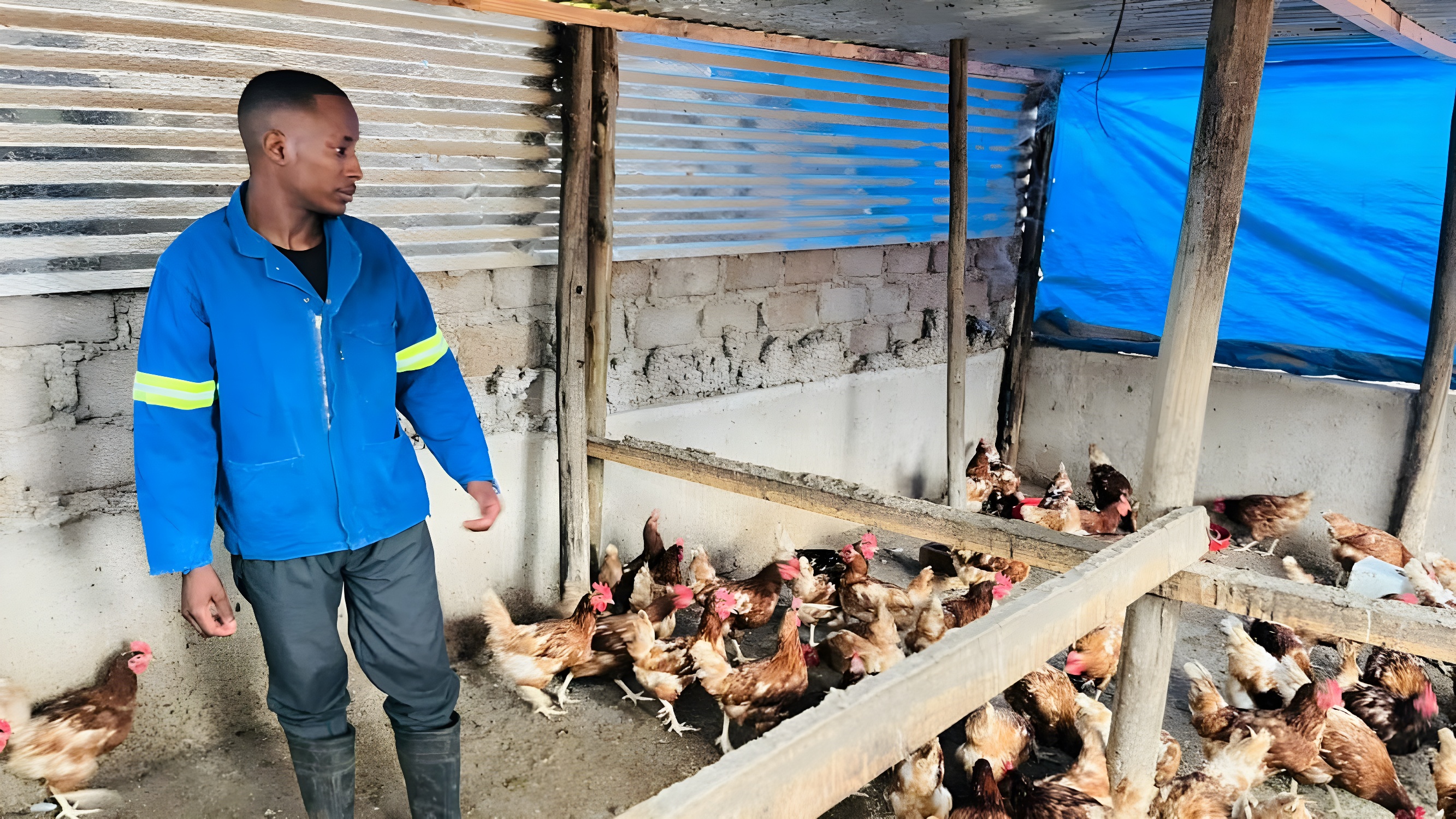
Matric top achiever, Tebatso Mokonyane inspects his chickens at his poultry business, which he co-owns with his aunt. Picture supplied.
Troubled by
the economic exclusion faced by people with disabilities, a partially blind top
matric achiever turned a portion of his meagre disability grant into a small
business aimed at creating employment.
Speaking to Diary Series of Deaf People, Tebatso Mokonyane (19) revealed that he saved R1,000 a month from
his R2,320 disability grant to start his informal lending business. By December
2025, he had saved R10,000, which he used as a startup capital for his business.
He also co-owns an egg poultry production business with his aunt, Emily
Mokonyane.
Born with glaucoma, Tebatso is a 2025 matric pupil from Rivoni School for the Blind in Limpopo. He was awarded third place in the Top Special Educational Needs Achievers category by Basic Education Minister Siviwe Gwarube at a ceremony held at Mosaïek Church in Randburg. Rivoni School, which has produced nine national top achievers including four first position winners, played a key role in shaping his journey.
READ: Limpopo Principal Overcomes Harsh Conditions to Lift Blind and Deaf School ResultsUnlike
typical informal lenders who charge up to 50 percent interest, Tebatso charges
30 percent, a rate he considers fair, particularly for university students. He
plans to take the business onto university campuses, where many rely on NSFAS
allowances.
“Living at
a boarding school made it easier to limit my spending and save consistently,”
he said.
His mother, Charlotte Mokonyane, laughed as she described the venture moments before the awards ceremony:
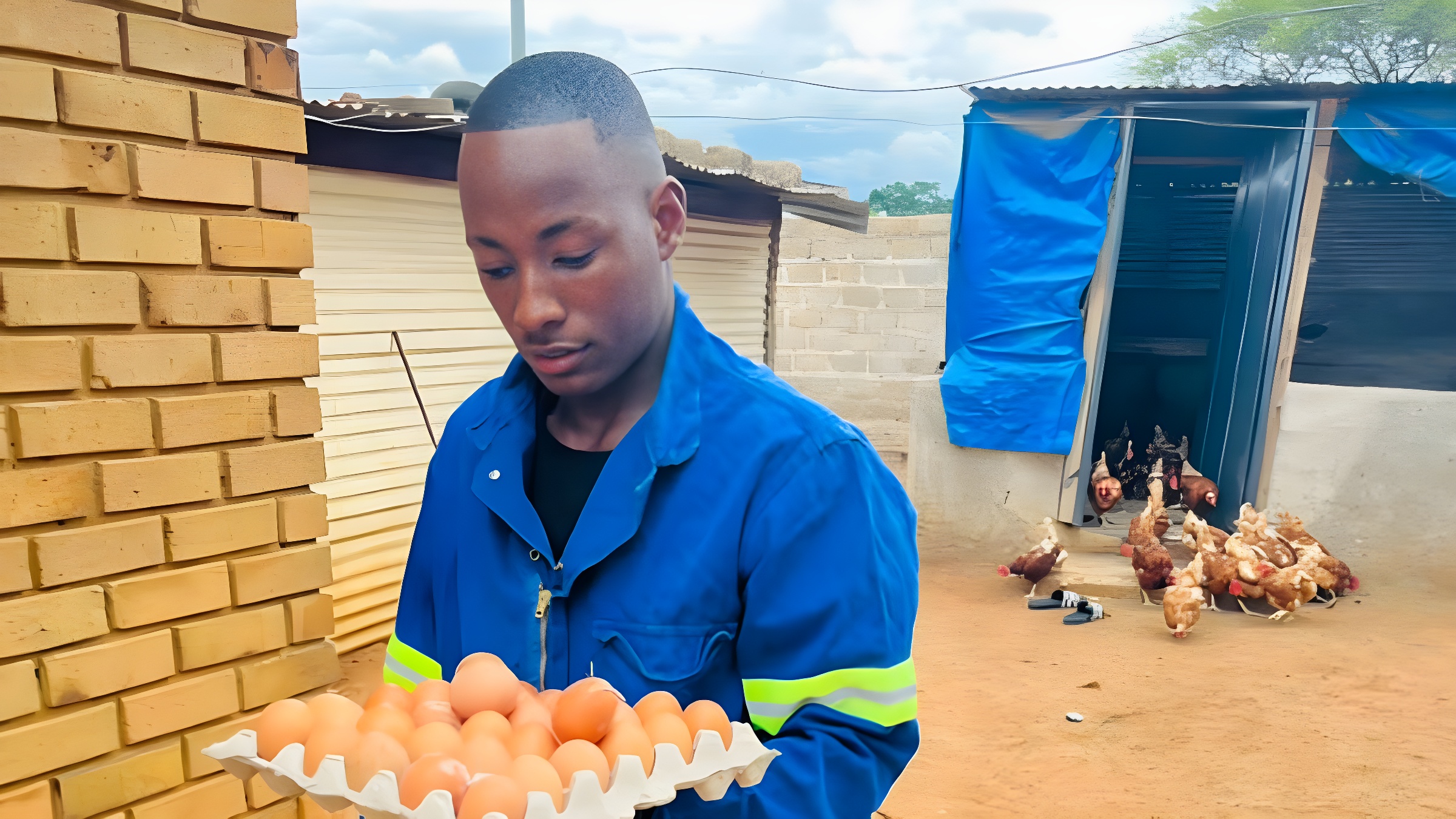
Matric top achiever, Tebatso Mokonyane inspects his chickens at his poultry business, which he co-owns with his aunt. Picture supplied.
“He lends money to us and people in the community, starting from R500, and charges 30 percent.”
Hailing
from Mokopane, Tebatso said he set the interest rate after research:
“I knew lending to students at 50 percent would be unfair. Even though the business is not registered yet, I want to do things properly. I don’t believe in using violence like loan sharks, therefore I draft contracts for people who borrow money from me. I also check if someone can realistically repay before lending.”
Tebatso
achieved five distinctions out of seven subjects, though he declined to
disclose individual marks. His entrepreneurial instincts extend beyond lending.
“I studied
the market in my community and saw that poultry could work. Eggs are always in
demand. I started the poultry business in January last year. I sell a tray of
30 eggs for R70, or two trays for R140. Feeding the chickens twice a day is the
main challenge,” he said.
“My aunt
focused on buying and caring for the chickens. I spent about R4,000 to build
the poultry house and hired people to construct it. We started with 100 chickens,
and we are remaining with 96 because others died.”
READ: Against the Odds: Six Learners Who Refused to Be Left Behind
Tebatso
said his drive to build businesses comes from observing the lives of people
with disabilities:
“Most are unemployed because they are not fully included in the economy. I want to change that. This business is something my aunt and I built together — I built the poultry house, and she bought the chickens. It’s a co-business.”
He plans to
study business management at the University of Johannesburg. “I have always
been passionate about business — I have resold phones, sneakers, and now eggs.
For me, it’s more than profit; I want to create employment.”
In addition
to the national award, Tebatso earned second place in Limpopo’s provincial awards,
while Rivoni School for the Blind obtained first position. Principal Connie
Mabaso said the school’s success stems from self-motivated teachers and a
supportive environment.
Reflecting
on the invitation to dine with Minister Gwarube, Tebatso recalled an emotional
moment:
“I was stressed when the message didn’t come. I went to the gym to clear my head. While I was there, I got a call. The person asked, ‘What are you doing at the gym at this hour?’ I replied, ‘Who are you?’ He then said, ‘Are you not blind?’ When he told me who he was, I couldn’t believe it. I had tears in my eyes. I screamed, and he said, ‘Don’t smash your phone, bra.’”
Tebatso
gradually lost vision in his left eye due to glaucoma. His mother said the
family’s journey was challenging.
“Mainstream
schools couldn’t accommodate his needs…At Rivoni School for the Blind, he found
support, belonging, and opportunity. Today, we are so proud — he is the first
in our family to go this far [invited by the minister] and is setting an
example for everyone.”
If you wish to republish any of our stories, please credit the authors and the publication — www.thedeafdiary.com — and include the URL of the original story to direct readers to the source.